JAKARTA, KOMPAS — The Business Competition Supervisory Commission, or KPPU, has announced that it is beginning to investigate TikTok’s business operations in Indonesia. KPPU suspects that the subsidiary of ByteDance, the giant technology company from China, is attempting in various ways to establish a monopoly and market dominance in operating TikTok Shop in Indonesia.
The Head of the Public Relations Bureau of KPPU, Deswin Nur, confirmed on Saturday (1/8/2026) in Jakarta that KPPU has begun investigating TikTok’s business operations in Indonesia. The KPPU investigation will focus on various behaviors of TikTok related to the sale and distribution of goods through TikTok Shop and its affiliated companies. TikTok is suspected of violating Articles 14, 17, 19, and 20 of Law Number 5 of 1999 concerning the Prohibition of Monopolistic Practices and Unfair Business Competition.
Article 14 of Law No. 5/1999 pertains to vertical integration. This article prohibits business actors from making agreements with other business actors aimed at monopolizing the production of certain products.
Article 17 pertains to monopolies. This article states that business actors are prohibited from dominating the production and/or marketing of goods and/or services that may result in monopolistic practices and/or unfair business competition.
Meanwhile, Article 19 pertains to market dominance. This article states that business actors are prohibited from engaging in one or more activities, either individually or in conjunction with other business actors, that may result in the occurrence of monopolistic practices and/or unfair business competition.
Article 20 contains a prohibition for business actors to supply goods and/or services by engaging in buying and selling or setting prices that are excessively low with the intention of eliminating or shutting down competitors’ businesses in the relevant market.
According to Deswin, before deciding to conduct an investigation, the KPPU had received reports from the public regarding various behaviors of Tiktok, after which the KPPU completed the clarification process. The elevation of status was decided in a commission meeting on July 22, 2026. The investigation stage aims to clarify the alleged violations and gather at least two valid pieces of evidence in accordance with the provisions of the legislation.
“During the investigation process, the KPPU will delve into allegations related to the relationship between Tiktok and the sellers, third-party logistics service companies, as well as allegations of creating barriers to entry or competitive obstacles for other business actors,” said Deswin.
Deswin did not specify the forms of public reports received by the KPPU and the period of the reports. However, he emphasized that various public reports received pointed to allegations that Tiktok violated Articles 14, 17, 19, and 20 of Law No. 5/1999.
TikTok in Indonesia has not yet responded when asked to confirm the KPPU’s statement.
The Chairman of the Indonesian Ecommerce Association (idEA), Budi Primawan, when contacted on Saturday (1/8/2026), stated that idEA has also heard information that the KPPU has begun investigating TikTok’s business in Indonesia. However, since this is still a process at the KPPU, idEA feels it is better for the association to respect the ongoing process first.
“From the perspective of idEA, the principle is simple. We support healthy and fair business competition while respecting the authority of the KPPU in carrying out its duties. The hope is that the process runs objectively and provides certainty for all parties,” said Budi.
Hit by various cases
Previously, various national media reported extensively on the alleged unilateral suspension of around 500 accounts of micro, small, and medium enterprises (UMKM) on Tiktok Shop. The Deputy for Small Business at the Ministry of UMKM, Temmy Satya Permana, confirmed this news on Wednesday (8/7/2026) in Jakarta.
Temmy stated that the Ministry of Small and Medium Enterprises had discussed the allegations with Commission VII of the DPR. Commission VII of the DPR received complaints regarding the alleged unilateral freezing of accounts belonging to 500 small and medium enterprises from the Indonesian Advocates Association (Peradi) Bekasi Raya.
“The complaint submitted relates to MSMEs that claim their accounts have been unilaterally frozen and the balances in their accounts cannot be withdrawn. This case is said to have occurred during the period of 2022–2023. We have also facilitated discussions with Tiktok Shop, and several cases have already been resolved,” he stated.
Temmy also revealed that the latest report indicates an increase in the number of MSMEs whose accounts are allegedly frozen unilaterally. However, Temmy did not disclose the exact increase as further investigation is still being conducted.
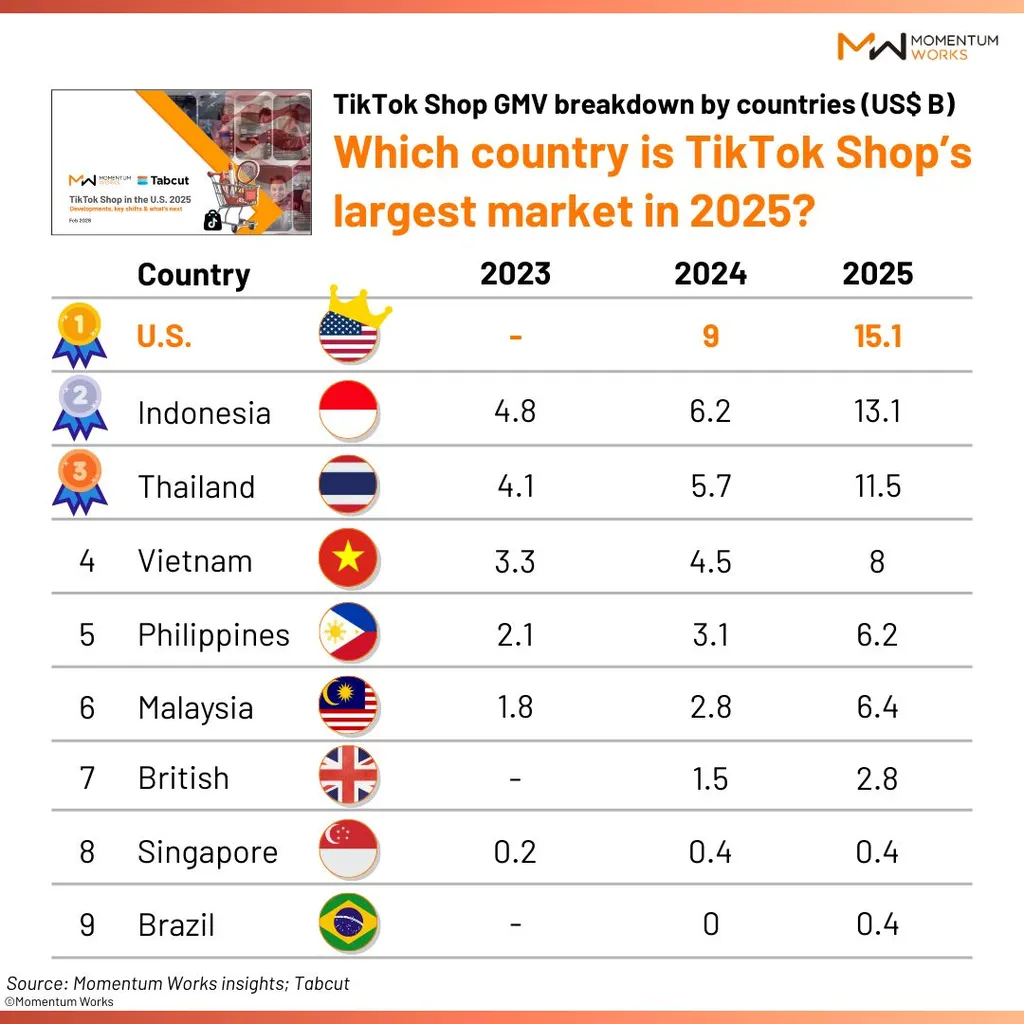
Based on a research report by Momentum Works and Tabcut (February 2026), TikTok Shop’s total gross merchandise value (GMV) globally will reach US$64.3 billion in 2025, doubling compared to 2024. This increase is in line with the expansion of TikTok Shop’s market reach to 16 countries.
In the United States, specifically, the GMV of Tiktok Shop is projected to grow to 15.1 billion USD by 2025, up from 9 billion USD in 2024. The GMV of Tiktok Shop in Southeast Asia is expected to double compared to the previous year, reaching 45.6 billion USD by 2025.
TikTok Shop Indonesia reached 13.1 billion USD in GMV. This positions Indonesia as the second-largest market for TikTok Shop globally.
Since acquiring Tokopedia, Tiktok Shop has frequently been hit by news of layoffs. Most recently, on Thursday (2/7/2026), Tiktok Shop confirmed that they have laid off employees from Tokopedia Indonesia as part of an organizational restructuring. However, the company has not disclosed the number of affected employees or the business units involved.
Another rumor circulating is that the Tokopedia application will be replaced by TikTok as a dedicated e-commerce application for TikTok Shop, separate from the TikTok application. Before the allegations of unilateral account freezing became widespread, there was a sense of dissatisfaction among several Tokopedia sellers as they were required to comply with the policy of integrating the seller center with TikTok Shop.
Monetization engine
Regarding the development of Tiktok Shop, Momentum Works in its opinion published on Substack on June 22, 2026, stated that Tiktok Shop is not merely a marketplace, but a monetization engine for attention that utilizes e-commerce to enhance its advertising business. Unlike traditional marketplaces that generate revenue from buying and selling transactions, ByteDance, as the parent company of Tiktok, has established Tiktok Shop as part of a traffic monetization ecosystem.
Users come to TikTok to enjoy content, not to shop. However, every interaction up to purchase generates highly valuable behavioral data to enhance the accuracy of ad targeting. Therefore, e-commerce is not the primary goal, but rather a tool to collect transaction data, extend application usage time, and strengthen ByteDance’s advertising engine.
“The growth of TikTok Shop is more driven by its large user base and the company’s relentless efforts to optimize the content ecosystem and its conversion, rather than just by pricing,” said Insight Manager of Momentum Works, Teng Ian Wong.
Tokopedia is a valuable asset for Tiktok Shop, particularly for tapping into its premium customer base and purchasing experience in categories such as electronics and branded goods. Managing both Tiktok Shop and Tokopedia operations simultaneously is not easy for Tiktok, prompting the company to continuously seek ways to address this challenge.
JAKARTA, KOMPAS — The Business Competition Supervisory Commission, or KPPU, has announced that it is beginning to investigate TikTok’s business operations in Indonesia. KPPU suspects that the subsidiary of ByteDance, the giant technology company from China, is attempting in various ways to establish a monopoly and market dominance in operating TikTok Shop in Indonesia.
The Head of the Public Relations Bureau of KPPU, Deswin Nur, confirmed on Saturday (1/8/2026) in Jakarta that KPPU has begun investigating TikTok’s business operations in Indonesia. The KPPU investigation will focus on various behaviors of TikTok related to the sale and distribution of goods through TikTok Shop and its affiliated companies. TikTok is suspected of violating Articles 14, 17, 19, and 20 of Law Number 5 of 1999 concerning the Prohibition of Monopolistic Practices and Unfair Business Competition.
Article 14 of Law No. 5/1999 pertains to vertical integration. This article prohibits business actors from making agreements with other business actors aimed at monopolizing the production of certain products.
Article 17 pertains to monopolies. This article states that business actors are prohibited from dominating the production and/or marketing of goods and/or services that may result in monopolistic practices and/or unfair business competition.
Meanwhile, Article 19 pertains to market dominance. This article states that business actors are prohibited from engaging in one or more activities, either individually or in conjunction with other business actors, that may result in the occurrence of monopolistic practices and/or unfair business competition.
Article 20 contains a prohibition for business actors to supply goods and/or services by engaging in buying and selling or setting prices that are excessively low with the intention of eliminating or shutting down competitors’ businesses in the relevant market.
According to Deswin, before deciding to conduct an investigation, the KPPU had received reports from the public regarding various behaviors of Tiktok, after which the KPPU completed the clarification process. The elevation of status was decided in a commission meeting on July 22, 2026. The investigation stage aims to clarify the alleged violations and gather at least two valid pieces of evidence in accordance with the provisions of the legislation.
“During the investigation process, the KPPU will delve into allegations related to the relationship between Tiktok and the sellers, third-party logistics service companies, as well as allegations of creating barriers to entry or competitive obstacles for other business actors,” said Deswin.
Deswin did not specify the forms of public reports received by the KPPU and the period of the reports. However, he emphasized that various public reports received pointed to allegations that Tiktok violated Articles 14, 17, 19, and 20 of Law No. 5/1999.
TikTok in Indonesia has not yet responded when asked to confirm the KPPU’s statement.
The Chairman of the Indonesian Ecommerce Association (idEA), Budi Primawan, when contacted on Saturday (1/8/2026), stated that idEA has also heard information that the KPPU has begun investigating TikTok’s business in Indonesia. However, since this is still a process at the KPPU, idEA feels it is better for the association to respect the ongoing process first.
“From the perspective of idEA, the principle is simple. We support healthy and fair business competition while respecting the authority of the KPPU in carrying out its duties. The hope is that the process runs objectively and provides certainty for all parties,” said Budi.
Hit by various cases
Previously, various national media reported extensively on the alleged unilateral suspension of around 500 accounts of micro, small, and medium enterprises (UMKM) on Tiktok Shop. The Deputy for Small Business at the Ministry of UMKM, Temmy Satya Permana, confirmed this news on Wednesday (8/7/2026) in Jakarta.
Temmy stated that the Ministry of Small and Medium Enterprises had discussed the allegations with Commission VII of the DPR. Commission VII of the DPR received complaints regarding the alleged unilateral freezing of accounts belonging to 500 small and medium enterprises from the Indonesian Advocates Association (Peradi) Bekasi Raya.
“The complaint submitted relates to MSMEs that claim their accounts have been unilaterally frozen and the balances in their accounts cannot be withdrawn. This case is said to have occurred during the period of 2022–2023. We have also facilitated discussions with Tiktok Shop, and several cases have already been resolved,” he stated.
Temmy also revealed that the latest report indicates an increase in the number of MSMEs whose accounts are allegedly frozen unilaterally. However, Temmy did not disclose the exact increase as further investigation is still being conducted.
Based on a research report by Momentum Works and Tabcut (February 2026), TikTok Shop’s total gross merchandise value (GMV) globally will reach US$64.3 billion in 2025, doubling compared to 2024. This increase is in line with the expansion of TikTok Shop’s market reach to 16 countries.
In the United States, specifically, the GMV of Tiktok Shop is projected to grow to 15.1 billion USD by 2025, up from 9 billion USD in 2024. The GMV of Tiktok Shop in Southeast Asia is expected to double compared to the previous year, reaching 45.6 billion USD by 2025.
TikTok Shop Indonesia reached 13.1 billion USD in GMV. This positions Indonesia as the second-largest market for TikTok Shop globally.
Since acquiring Tokopedia, Tiktok Shop has frequently been hit by news of layoffs. Most recently, on Thursday (2/7/2026), Tiktok Shop confirmed that they have laid off employees from Tokopedia Indonesia as part of an organizational restructuring. However, the company has not disclosed the number of affected employees or the business units involved.
Another rumor circulating is that the Tokopedia application will be replaced by TikTok as a dedicated e-commerce application for TikTok Shop, separate from the TikTok application. Before the allegations of unilateral account freezing became widespread, there was a sense of dissatisfaction among several Tokopedia sellers as they were required to comply with the policy of integrating the seller center with TikTok Shop.
Monetization engine
Regarding the development of Tiktok Shop, Momentum Works in its opinion published on Substack on June 22, 2026, stated that Tiktok Shop is not merely a marketplace, but a monetization engine for attention that utilizes e-commerce to enhance its advertising business. Unlike traditional marketplaces that generate revenue from buying and selling transactions, ByteDance, as the parent company of Tiktok, has established Tiktok Shop as part of a traffic monetization ecosystem.
Users come to TikTok to enjoy content, not to shop. However, every interaction up to purchase generates highly valuable behavioral data to enhance the accuracy of ad targeting. Therefore, e-commerce is not the primary goal, but rather a tool to collect transaction data, extend application usage time, and strengthen ByteDance’s advertising engine.
“The growth of TikTok Shop is more driven by its large user base and the company’s relentless efforts to optimize the content ecosystem and its conversion, rather than just by pricing,” said Insight Manager of Momentum Works, Teng Ian Wong.
Tokopedia is a valuable asset for Tiktok Shop, particularly for tapping into its premium customer base and purchasing experience in categories such as electronics and branded goods. Managing both Tiktok Shop and Tokopedia operations simultaneously is not easy for Tiktok, prompting the company to continuously seek ways to address this challenge.